
The short answer
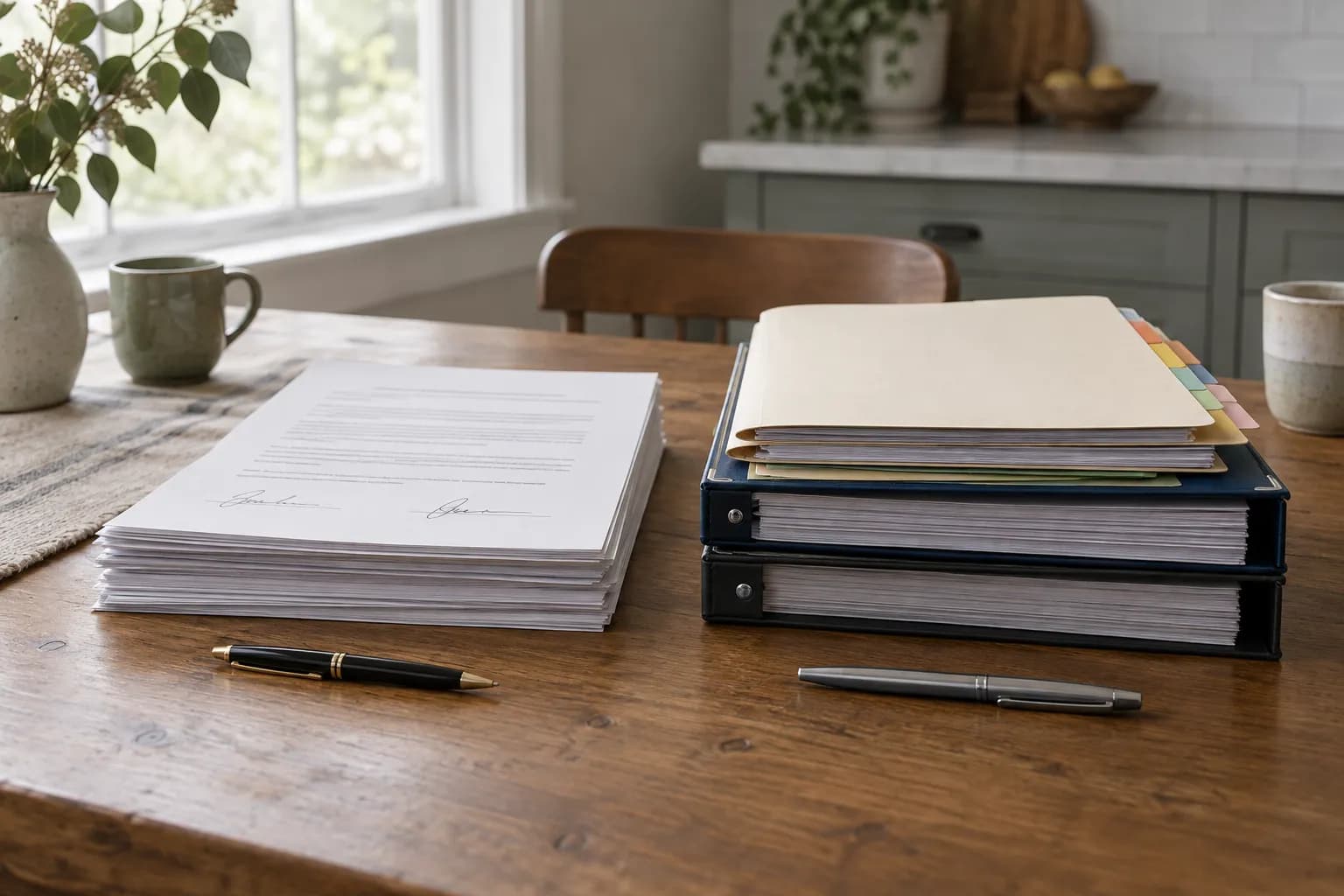
In an uncontested divorce, both spouses agree on every issue (property, debts, support and parenting) and a judge approves the agreement. In a contested divorce, the spouses disagree on at least one issue, so a judge decides it after evidence, hearings and sometimes a trial, which takes longer and costs more.
How is an uncontested divorce different from a contested divorce?
Two things separate them: agreement and a judge's role. In an uncontested divorce, you and your spouse agree on every issue, such as property, debts, support and parenting, and a judge approves your deal. In a contested divorce, you disagree on at least one issue, so a judge decides it after discovery, hearings and often a trial.
Discovery is the formal swapping of documents and sworn answers between spouses. Either way, there is a clear path to the end, and most couples settle some issues even when the case starts out contested.
In Florida, both kinds of divorce use the same ground: the marriage is "irretrievably broken," meaning it cannot be fixed (§ 61.052, Florida Statutes, 2026). Both also share the same minimum wait. A judge cannot sign the final judgment until at least 20 days after the petition is filed, unless the judge finds that waiting would be unfair (§ 61.19, Florida Statutes, 2026).
- Filing fee: $409 to file a dissolution of marriage in Duval County, plus $10 for each summons, as of October 2026 (Duval County Clerk of Courts)
- Same fee for both paths: the filing fee does not drop because you agree; what changes is the cost of lawyers, hearings and time
| Path | Who decides | Typical process | Cost and time |
|---|---|---|---|
| Uncontested | You and your spouse, then a judge approves | Signed settlement agreement, short final hearing | Lowest; can finish soon after the 20-day wait |
| Contested | A judge, on any issue you cannot settle | Discovery, mediation, hearings, possibly trial | Higher; often months or longer, with more lawyer time |
What decides whether your divorce is contested or uncontested?
Your divorce is uncontested only if you agree on everything. One open issue makes it contested, at least until you settle it.
- Property and debts: who keeps the house, cars, accounts and retirement funds, and who pays which bills
- Alimony: whether one spouse pays support to the other, how much and for how long
- Children: a parenting plan, time-sharing schedule and child support
- Paperwork: both spouses must sign and file the agreement and the required financial forms
- Cooperation: whether your spouse answers the petition, the legal papers that start the case
If you have no children together and have already split your property, Florida offers an even simpler option. It is called a simplified dissolution of marriage, under Florida Family Law Rule of Procedure 12.105.
Tip: Even if you start out contested, mediation can turn many issues into agreements. Each issue you settle is one less thing a judge has to decide, which saves time and fees.
To compare more divorce options, see the Divorce and Separation guide. If your spouse will not agree, hides money, or there is abuse in the home, talk to a family lawyer before you sign anything.
Frequently asked questions
Can I get an uncontested divorce in Florida if I have children?
Yes. You can have an uncontested divorce with children if you agree on a parenting plan, time-sharing and child support. You cannot use the simplified dissolution process, though, because Rule 12.105 requires that you have no minor or dependent children together and that the wife is not pregnant. A judge still reviews your plan for the children's best interests.
What is an uncontested divorce?
An uncontested divorce is one where both spouses agree on every issue: property, debts, alimony and, if there are children, parenting and support. You put the terms in a signed settlement agreement. A judge reviews it at a short hearing and, if everything is in order, signs a final judgment. It is usually the fastest and least costly way to divorce.
Can an uncontested divorce become contested?
Yes. If either spouse changes their mind or a new disagreement comes up before the judge signs the final judgment, the case becomes contested. Then the court may order discovery, mediation and hearings. That is why it helps to get your agreement in writing, signed by both of you, as early as you can.
What is a Simplified Dissolution of Marriage?
A Simplified Dissolution of Marriage is Florida's fast-track divorce under Rule 12.105. Both spouses must agree the marriage is broken, have no minor or dependent children together, and have already divided property and debts. You file a joint petition, Form 12.901(a), and both of you must appear before the judge. The clerk can give you the forms.
Can we waive the financial disclosure requirement?
Sometimes. Under Florida Family Law Rule of Procedure 12.285, spouses can agree to change most disclosure steps, but not the child support guidelines worksheet. You can also file a joint waiver of filing financial affidavits, yet each spouse must still give the other a sworn financial affidavit. The rule does not apply to simplified dissolutions at all.
Sources
- Section 61.052, Florida Statutes (2026): Dissolution of marriage, The Florida Legislature
- Section 61.19, Florida Statutes (2026): Entry of judgment of dissolution of marriage, delay period, The Florida Legislature
- Rule 12.105. Simplified Dissolution Procedure, Florida Rules
- Rule 12.285. Mandatory Disclosure, Florida Rules
- Proposed rule amendments to Florida Family Law Rule of Procedure Rule 12.105 (Simplified Dissolution Procedure), The Florida Bar
- Fee Schedules, Duval County Clerk of Courts